Panther – Field Data Vibration Test Replication Software
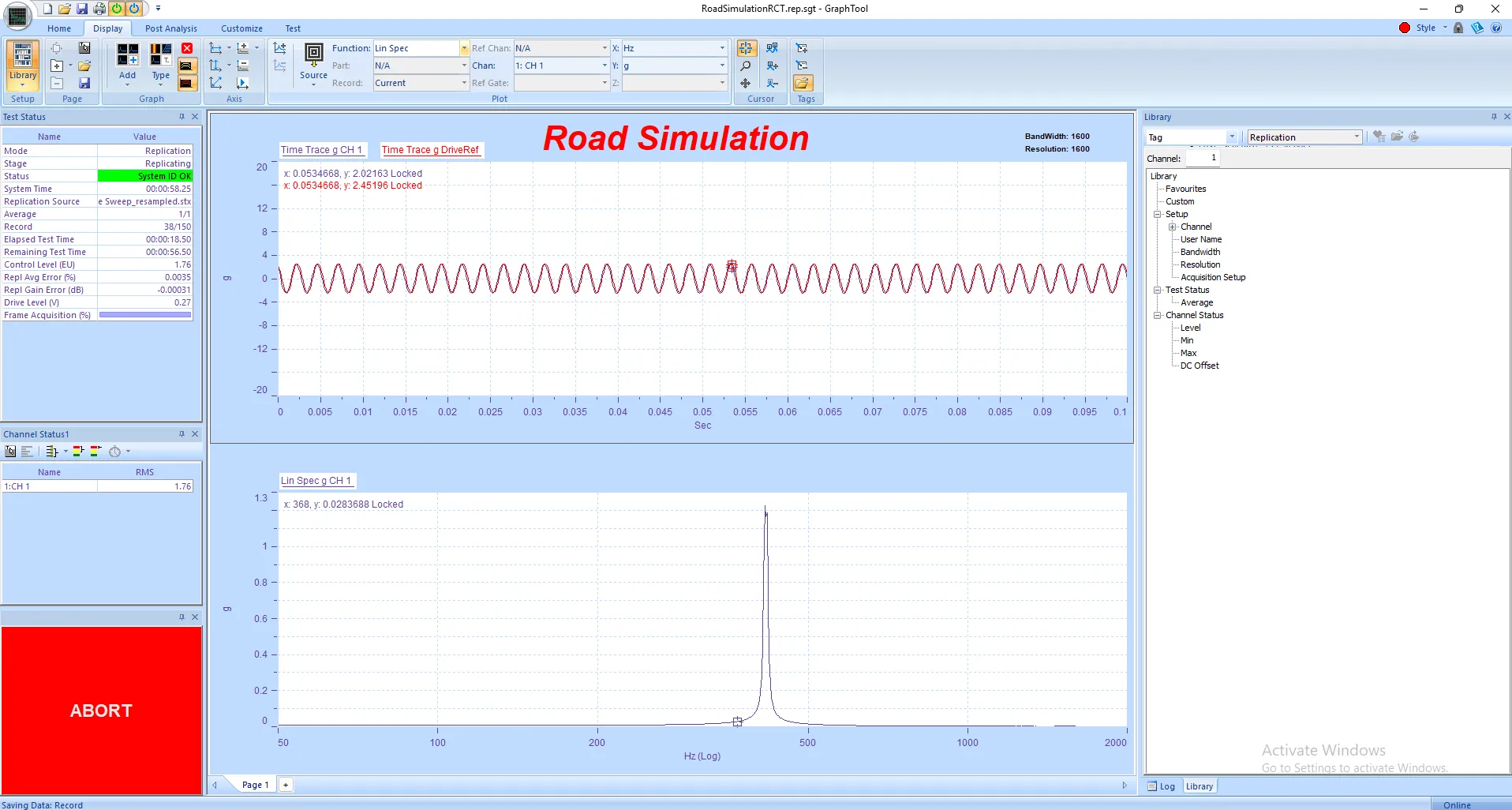
Panther Field Data Replication Control delivers precision and performance in time-domain waveform...

ShakerScope characterizes the whole rig: shaker, amplifier, fixture, slip table and test article. One multi-channel sine sweep becomes a customer-ready report with the usable bandwidth, every significant resonance, and the likely cause behind each finding.
| Result | Measured | Rated |
|---|---|---|
| Optimal band | 14–2,860 Hz | |
| Usable band | 9–3,780 Hz | 5–4,500 Hz |
| Resonances | 1 · 589 Hz, fixture | |
| Min coherence | 0.97 | |
| Peak THD | 1.8 % at 9 Hz |
Usable band covers a 20–2,000 Hz profile. Fixture mode at 589 Hz: check bolt torque.
A test is only as good as the rig that runs it. A controller that closes the loop perfectly on its own reference still can't compensate for the physics underneath it.
The test article sees the mode, not the level you asked for.
A nonlinear sink. Drive energy goes everywhere except where you want it.
You ask for a sine; the article sees harmonics.
Suspension stiffening raises the low end. Armature wear or amplifier aging pulls down the high end.
Many "controller is broken" calls turn out to be a rig asked to do something it physically can't, such as control near DC on a shaker that only responds above 5 Hz. ShakerScope settles the question with numbers.
ShakerScope normalizes the control channel's response to mid-band and shades two nested bands, each requiring coherence above 0.9. Lay your test profile over them: if the usable band is narrower, the shaker physically can't deliver it.
Up to ten channels from the customer's own Panther or Lynx. Electrodynamic, servo-hydraulic and piezo shakers.
| Result | Per | Points to |
|---|---|---|
| FRF magnitude | channel | How each point responds |
| Resonances | freq, Q | Fixture, suspension or armature modes |
| Coherence | channel | Loose mounts, cables, sensors at a node |
| THD | channel | Amplifier clipping, stroke limits, impacting |
| Cross-axis | 2 channels | Rocking, slip-table tilt |
| Mains pickup | channel | Ground loops, facility wiring |
About 10 minutes the first time; the sweep runs 2–5 minutes. No need to open the full controller interface.
Customer info and the shaker's rated specs. Ask the AI where to mount each accelerometer.
Role, position, axis and sensitivity per channel. Sweep beyond the test profile so roll-off is measured, not assumed.
Pre-test checks, the sweep and a controlled shutdown run automatically through Panther or Lynx.
Five-plot PDF on site, AI narrative when online, or an offline package to finish later.
Verdict: PASS. The rig is in healthy condition. With the head expander it delivers a usable bandwidth of 9–3,780 Hz and an optimal band of 14–2,860 Hz against a rated range of 5–4,500 Hz. Coherence stayed at or above 0.97 on every channel. One fixture-class resonance at 589 Hz (Q 17) sits inside the optimal band.
| Freq (Hz) | Q | dB rel | Channel | Class | Interpretation |
|---|---|---|---|---|---|
| 589 | 17 | +4.5 | FrontLeft Z | Fixture | Head-expander mode; check bolt torque |
| Priority | Action | Expected impact |
|---|---|---|
| Medium | Re-torque head-expander bolts and re-sweep | Confirms whether the 589 Hz mode is a mounting issue |
| Info | Save this run as the rig's baseline | Enables drift tracking at the next visit |
Sample report excerpt, illustrative values.
A PDF the technician hands straight to the customer, in two forms.
Overlay a baseline run and today's run on all five plots, with channels matched by position and axis. The AI comparison report returns a verdict and lists what moved.
New, lost and shifted resonances, bandwidth and coherence trends, and prioritized maintenance recommendations. The basis of an annual health check.
Five minutes at low level. Are the channels, fixture and shaker right today?
The full characterization. What can this rig deliver, what limits it, and what has changed?
ShakerCheck is a five-minute low-level check before every test. ShakerScope is the full characterization before every program and every year: what the rig can deliver, what limits it, and what has changed.
Electrodynamic, servo-hydraulic and piezo shakers, with up to ten channels from the customer's own Panther or Lynx.
Yes. The diagnostic report works offline, and the run can be exported as one package and carried out to generate the AI report elsewhere.
ShakerScope works with Spectral Dynamics Panther and Lynx controllers.
Panther Applications
Panther Field Data Replication Control delivers precision and performance in time-domain waveform...

Panther Analyzer extends the power of Spectral Dynamics' next-generation Panther platform with...
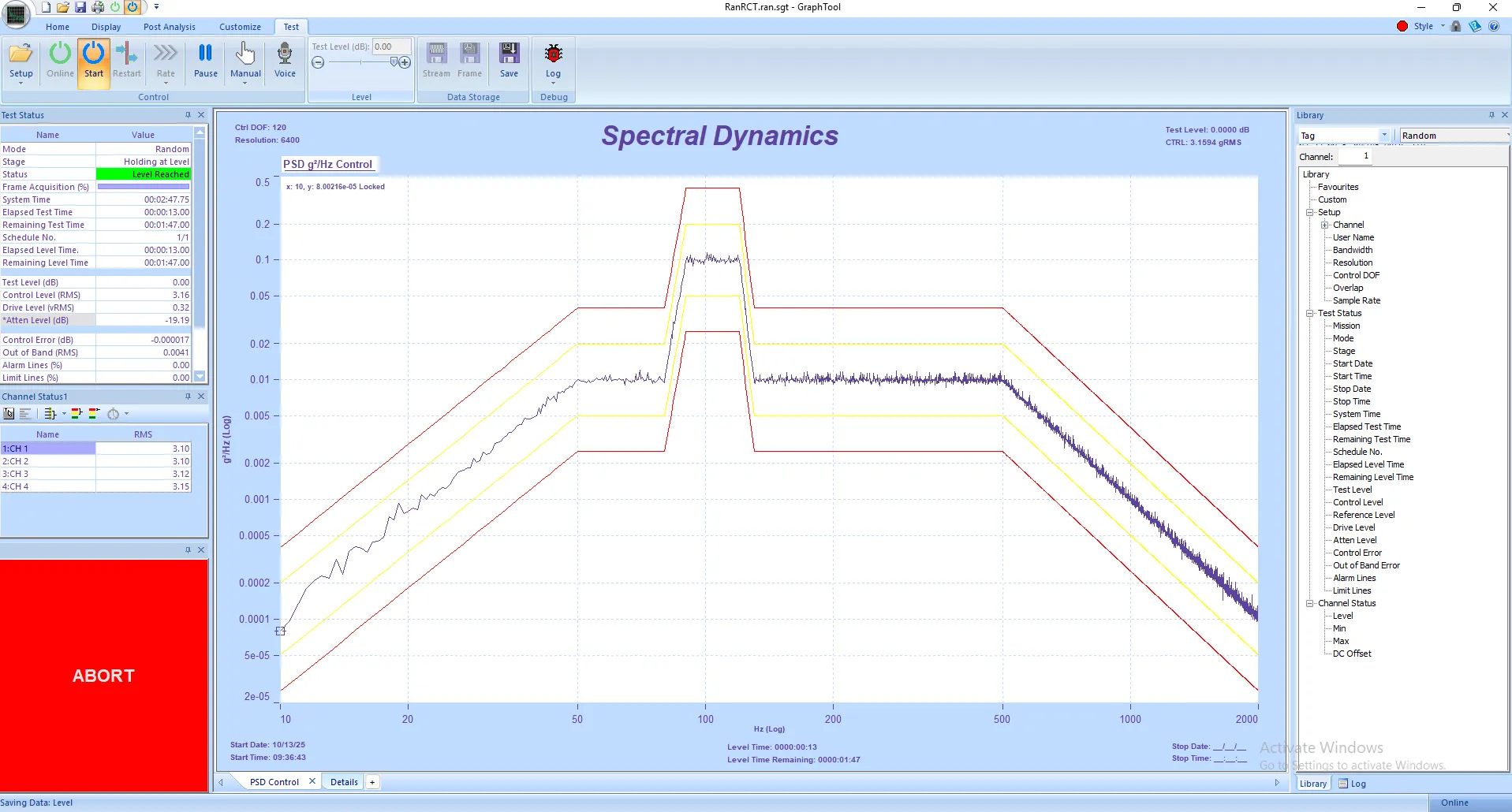
Spectral Dynamics invented closed-loop digital vibration control and continues to lead with...
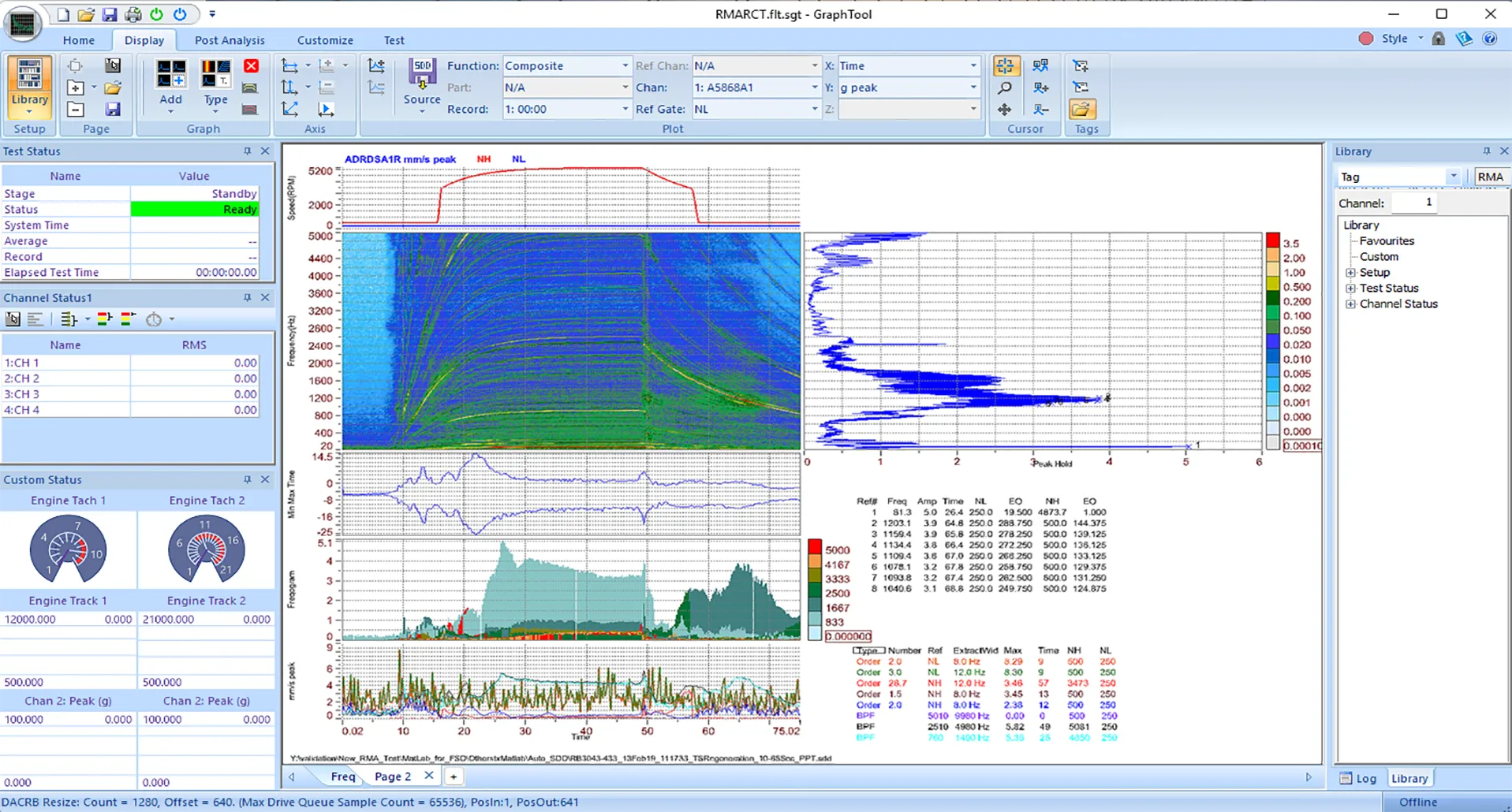
Spectral Dynamics invented closed-loop digital vibration control and continues to innovate with...
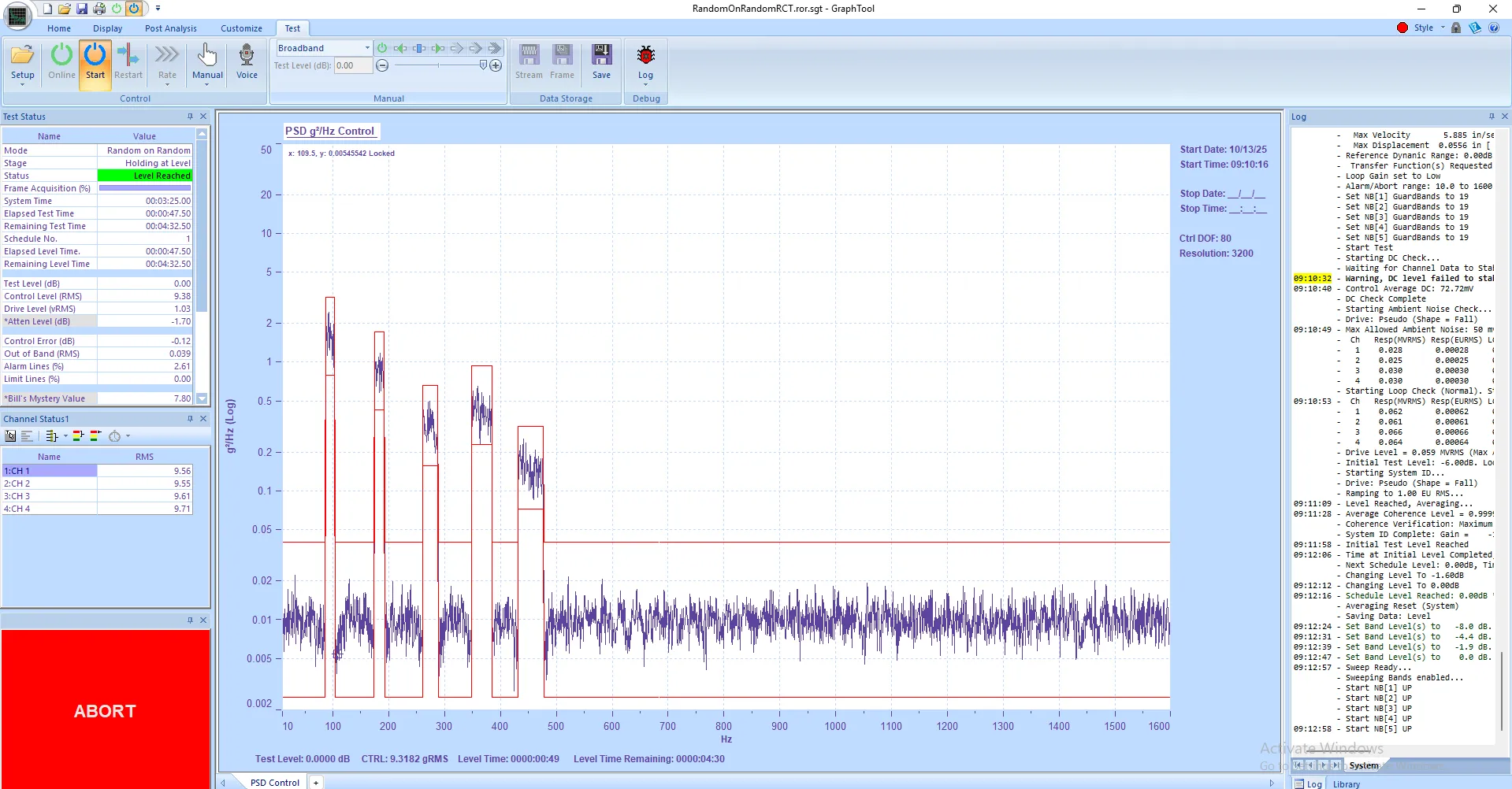
Panther Random on Random Control delivers precision and performance in multi-environment vibration...
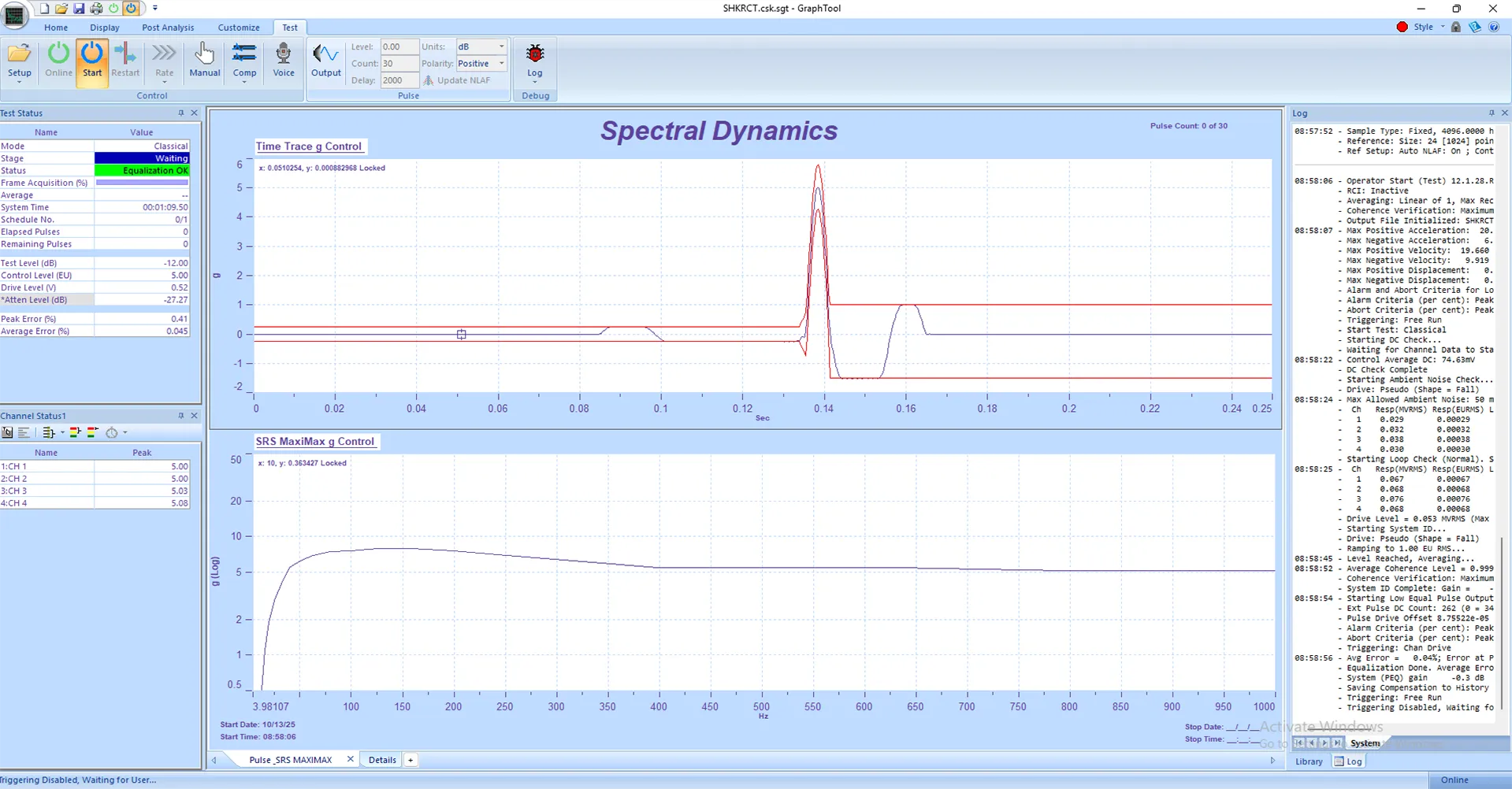
Panther Shock Control delivers precision and performance in transient vibration testing. Built on...
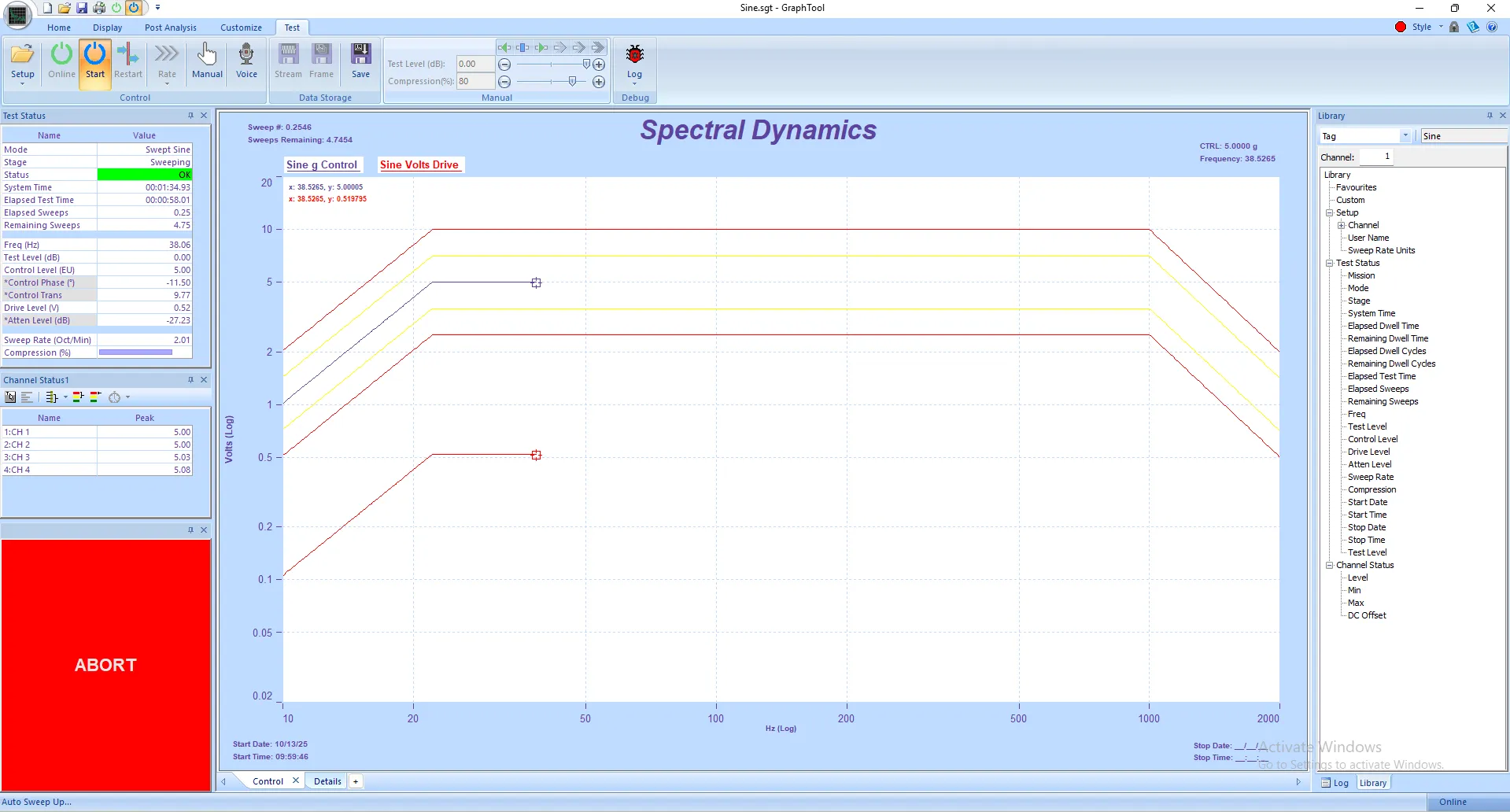
Panther Sine Control delivers unmatched precision and stability for both swept-sine and...
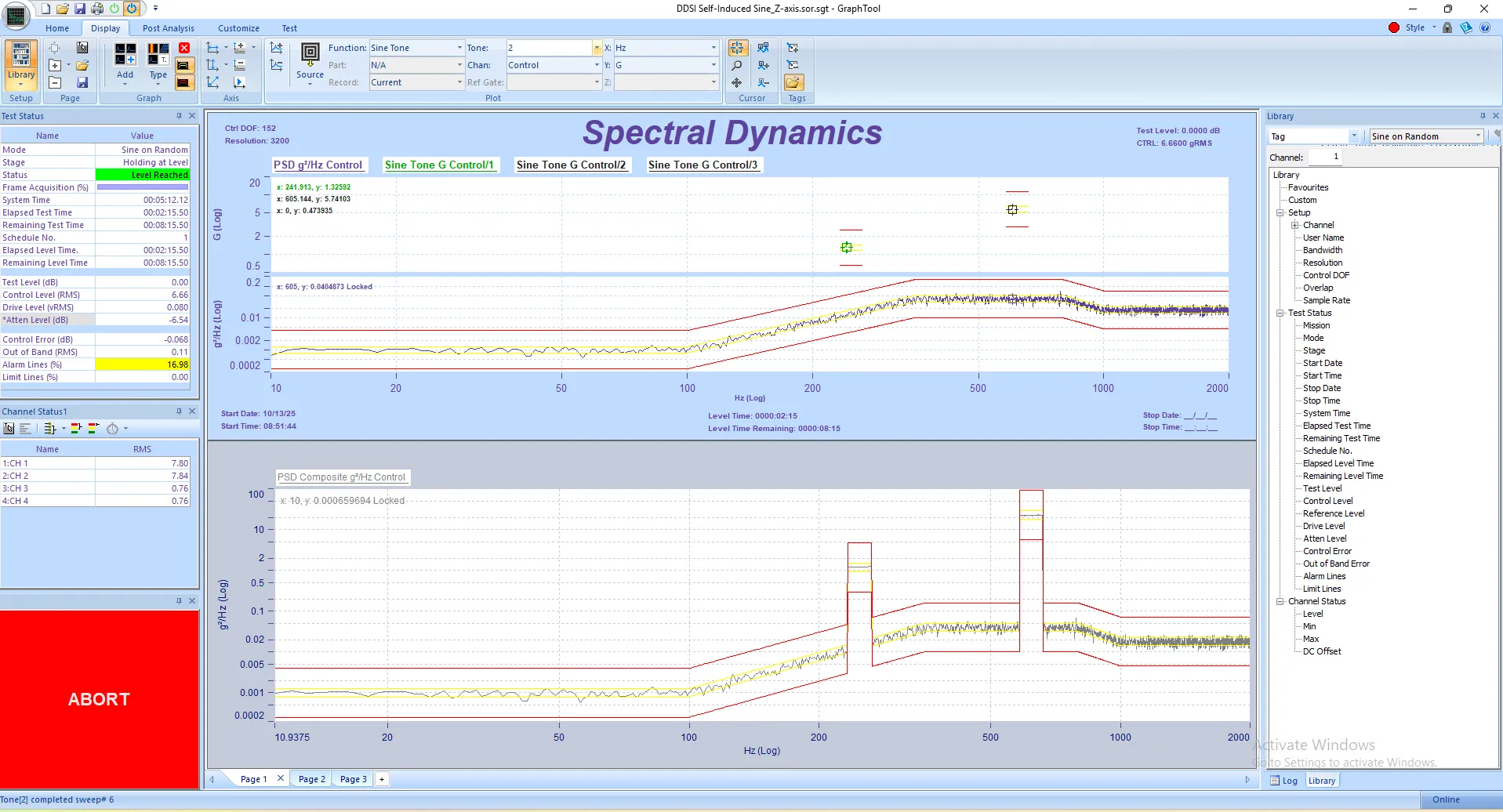
Panther Sine-on-Random Control delivers precision and performance in mixed-mode vibration testing....